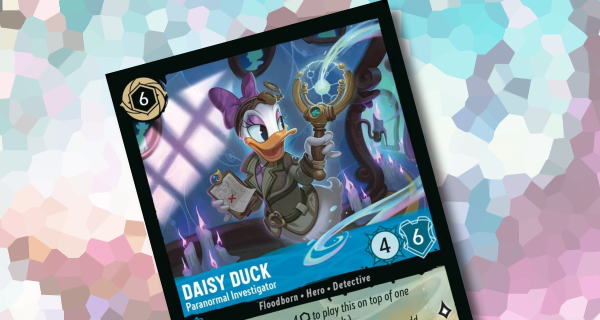
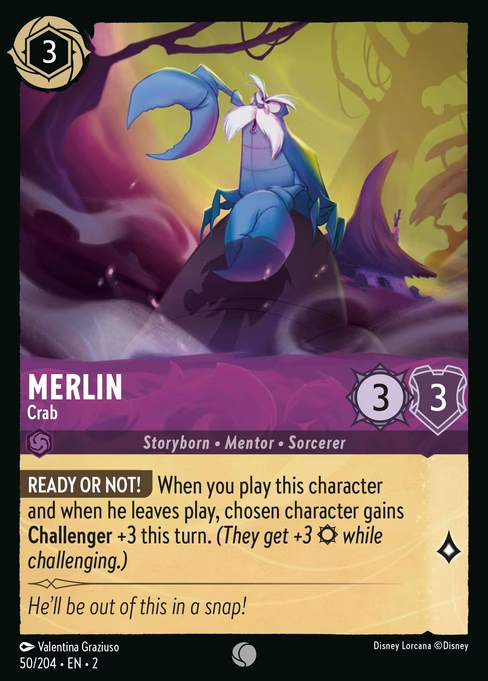
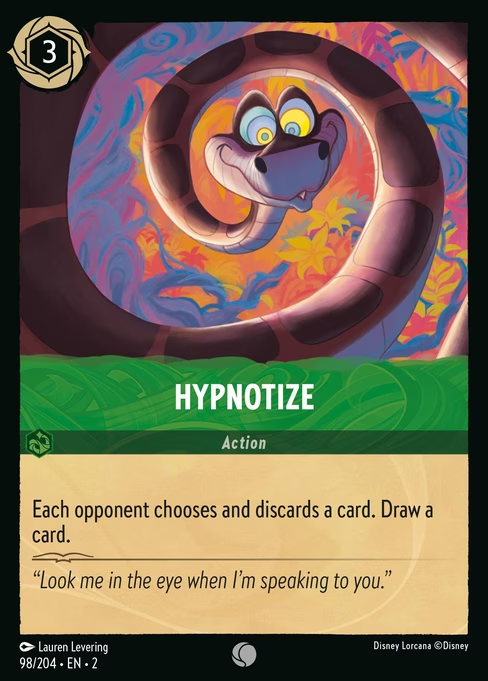
Winterspell launched yesterday, and the community's response dominates this week's signals. Launch events, set opening discussions, and early testing fill the conversation. The format itself has responded too, but not with revolution. Cards from Winterspell are appearing in competitive lists on day one. At the same time, established cards from earlier sets are moving as players reassess their options.
What matters this week isn't which Winterspell cards players are testing. It's how they're testing them. Mowgli's presence in competitive lists has grown substantially. Royal Guard is appearing more frequently. Ursula is gaining ground. These cards predate Winterspell, but they're shifting right now. The format's foundations remain stable. Cheshire Cat appears in every deck. Genie and Elsa anchor nearly all competitive play. But the middle tier is recalibrating, and that recalibration reveals how players think about format expansion.
Meta Pressure Read
The pressure this week comes from celebration, not evaluation. The community is focused on Winterspell's arrival: set openings, launch events, accessibility. Discussion centers on experiencing the set, not on whether it solves format constraints. That tells you where the format stands. Players aren't desperate for rescue. They're exploring new options within a game they already understand.
Cheshire Cat remains universal. Amethyst's inevitability hasn't shifted. What Winterspell introduces isn't disruption. It's additions. And additions create questions without demanding answers. Do these new cards replace established choices, supplement them, or open entirely new strategies? Launch day doesn't resolve those questions. It starts asking them. The immediate Winterspell adoption in competitive lists suggests coordinated testing rather than reactive panic.
At the same time, the cards everyone already knows remain silent in discussion. Cat, Genie, Elsa, Demona, Hades. None appear in top community conversations. Players aren't talking about them because there's nothing new to say. They're universal, and universality doesn't generate conversation. It generates acceptance. The meta's foundations are settled enough that launching a new set doesn't prompt players to question whether the dominant engines still work.
Cards That Mattered This Week
Mowgli - Man Cub
Mowgli's increased presence reflects how players respond to format expansion. When new cards arrive, established options get re-examined. Mowgli offers tempo and board presence in Amber shells, and right now players who'd previously dismissed him are reconsidering that assessment. The card didn't change. The context did.
What makes Mowgli significant isn't that Winterspell made him better directly. It's that Winterspell's arrival prompted players to revisit cards they'd undervalued. Format shakeups create opportunities for rediscovery, even when the shakeup doesn't explicitly support those cards. Mowgli represents that dynamic: a known tool gaining ground because the meta is adjusting and players are reassessing their assumptions about what works.
Ursula - Deceiver
Ursula is gaining ground, appearing more frequently in lists that need flexible answers. The card offers versatility that becomes more valuable when the format expands and predictability decreases. Players are hedging against uncertainty, and Ursula provides that hedge without requiring fundamental deckbuilding changes.
The card matters because it signals how players are thinking about this moment. Rather than committing fully to new strategies built around Winterspell, they're adding tools that increase optionality. Ursula fits that approach perfectly. She improves existing shells while leaving room to adapt as Winterspell's integration patterns become clearer over the coming weeks.
The Horseman Strikes
The Horseman Strikes is seeing renewed adoption in decks that need efficient removal. The card existed before Winterspell, but its presence is growing as players tighten their interaction suites. When formats expand, the need for clean answers increases. The Horseman provides that without consuming significant resources or forcing deckbuilding concessions.
What makes this significant is what it reveals about player priorities. They're not abandoning interaction to test new threats. They're reinforcing their ability to answer threats while exploring what Winterspell offers. That balance between defence and exploration characterises how players are approaching this week. It's methodical, not speculative.
Practical Implications
If you're preparing for competitive play right now, launch week creates specific opportunities and specific risks. The format is fluid. Players are testing. Established strategies remain reliable, but windows exist for innovation before consensus forms around which Winterspell cards matter and which don't.
The safest approach is optimisation within proven frameworks. Mowgli and Royal Guard gaining ground suggests players are tightening existing shells while evaluating new additions selectively. If you're running Amethyst, Cat and Genie remain automatic. If you're running Steel or Amber, established tools are performing well during this adjustment period. Launch week doesn't invalidate what worked last week.
The riskier approach is committing to Winterspell-centric strategies before testing validates them. Day-one adoption marks experimentation, not validation. Those cards might stabilise as players refine their approach, or they might fade as testing concludes they don't offer sufficient advantage over established options. Launch week doesn't tell you which outcome materialises. It tells you testing is happening.
The middle path is selective integration. Test Winterspell cards that complement what you're already doing without requiring reconstruction. If you find improvements, adopt them. If not, you haven't sacrificed consistency for speculation. Launch week rewards flexibility more than commitment, because the information landscape is still forming.
Creative Space
Launch week for a major release is the most creatively open moment in any format cycle. Consensus hasn't formed. Players are exploring. This week captures the start of that exploration, not its conclusion. The opportunity exists in determining which Winterspell applications have legs before the broader community reaches consensus.
The community's focus this week is on accessibility and celebration: launch events, set openings, online play options. That's not competitive analysis, but it matters. It signals enthusiasm rather than resignation. When a format is desperate for change, set releases generate urgency. When a format is healthy but stable, set releases generate curiosity. This week's signals suggest the latter.
If you're willing to accept short-term variance, this is the moment to test aggressively. The format is adjusting. Information from experimentation now informs decisions later. Players who explore early and share findings help shape what the format becomes. Players who wait for consensus arrive after optimal lines have been identified but also after opportunities for discovery have closed.
The question for creative deckbuilders isn't whether Winterspell succeeded or failed on day one. It's whether the initial testing captured the set's full potential or whether deeper exploration reveals applications the first wave missed. That question won't be answered this week. But the work to answer it begins now.
What's Coming
Launch day rarely predicts outcomes weeks later. Winterspell's integration pattern over the coming weeks clarifies whether day one represents a ceiling or a starting point. If Winterspell cards become more prevalent and additional options join them, the set is landing. If adoption remains flat or declines, early testing didn't find competitive applications beyond what's visible today.
The cards to watch aren't just Winterspell additions. They're pre-Winterspell options being re-evaluated. Mowgli and Royal Guard gaining ground suggests players are reassessing the entire card pool, not just the new set. That reassessment might uncover overlooked strategies that become relevant as the format adjusts to accommodate whatever Winterspell brings long-term.
The broader pattern to monitor is whether Amethyst's dominance holds. Cheshire Cat, Genie, Elsa, Demona. These remain the format's pillars. Whether that continues depends on whether Winterspell offers tools that pressure Amethyst's inevitability or enable strategies that bypass it. Day one suggests neither has happened yet. The coming weeks will show whether that changes or whether the format's fundamental dynamics remain constant despite new options becoming available.
•