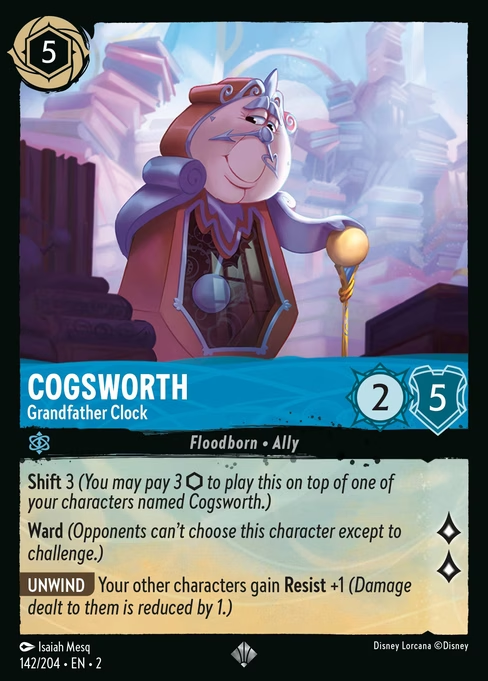
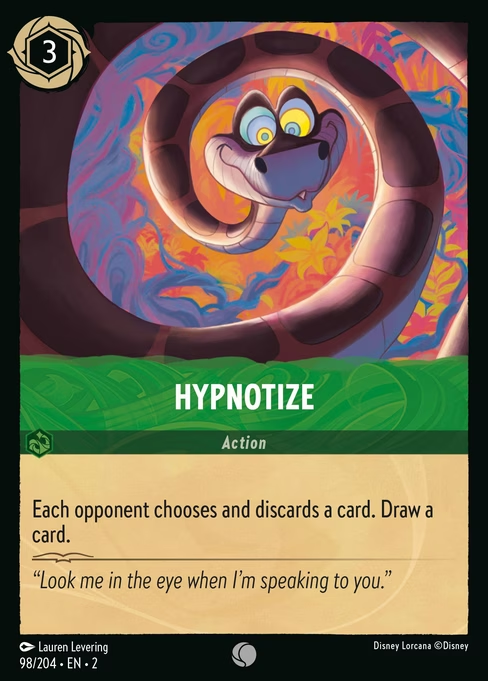
Even without today’s newer mechanics, Azurite Sea introduced a toolkit of cards that still shows up in serious deckbuilding.
Azurite Sea is one of those Disney Lorcana sets that becomes more impressive with time. It arrived with a clear sense of adventure and discovery, and it also delivered a group of cards that stayed relevant well beyond its release window. If you look at how people build decks today, you still see Azurite Sea influence in the form of efficient interaction, resilient characters, and flexible tempo tools.
This is a retrospective summary rather than a release day recap. The goal is to explain what Azurite Sea added to the game, why certain cards have endured, and why it remains a useful set to understand, whether you are new to Lorcana or refining a competitive list.
The identity of Azurite Sea
On the official product page, Azurite Sea is framed as a voyage into the unknown, with a large set and a strong sense of story and movement. That tone mattered because it aligned with how many of the set’s better cards play. Azurite Sea rewards players who want options, who value flexible turns, and who like to shift between pressure and control depending on what the game demands.
Rather than being defined by one headline mechanic, the set’s legacy is that it strengthened core Lorcana ideas: tempo, efficient trading, and using your hand as a real resource, not just a place to hold cards.
The cards that still matter in deckbuilding conversations
Not every powerful card becomes a lasting card. Many cards spike early and disappear once the environment shifts. A handful from Azurite Sea have done the opposite, staying relevant because they solve common problems in clean, dependable ways.

Sail the Azurite Sea
This is one of the clearest examples of an enduring utility card. It helps you develop your inkwell while keeping your hand moving, which is exactly what many decks want when they are trying to maintain momentum into the mid game.
Tiana, Restaurant Owner
Tiana is remembered not just because she is strong, but because she changes how opponents challenge while she is exerted. It is a good example of a card that alters decision making and can force awkward lines from an opponent who wants to stay aggressive.
Calhoun, Marine Sergeant
Calhoun is a practical example of why Steel characters from Azurite Sea remain appealing. She brings built in damage reduction and rewards successful challenges with lore, which fits naturally into decks that want to win the board and convert that into points.
Yzma, Conniving Chemist
Yzma stands out as one of the set’s memorable character designs, including a version that drew attention as a chase card during the reveal period.

Diablo, Obedient Raven
Diablo is a compact card that offers value when it is removed, which makes it attractive in decks that expect interaction and want to avoid falling behind on resources.
Madam Mim, Tiny Adversary
Mim is a good reminder that Azurite Sea supported proactive board plans as well. She reinforces challenging as a theme, and she rewards decks that want to fight rather than simply race.
Prince Phillip, Royal Explorer
Phillip is a useful reference point for newer players because Ward is an easy mechanic to understand but difficult to play around. He shows how Azurite Sea contributed to the idea of sticky, hard to answer characters.
Lilo, Escape Artist and The White Rose, Jewel of the Garden
Both cards show a different side of the set. Lilo leans into recursion in a simple, accessible way, while The White Rose is a clean, low friction way to gain lore on entry, which makes it a tidy option for decks that want efficiency.

Bend to My Will
This is a high impact effect that can reshape a turn cycle and punish players who stockpile cards without converting them into board presence. It is the kind of card that remains relevant because its role is timeless.
Mr Smee, Steadfast Mate and Tinker Bell, Fast Flier
These two help illustrate Azurite Sea’s relationship with Evasive. Smee can gain Evasive during your turn, and Tinker Bell is a straightforward Evasive character that remains easy to include when you want pressure that is harder to interact with.
Go Go Tomago, Darting Dynamo and Maui, Half Shark
These are examples of cards that bring both pressure and play patterns people enjoy. Go Go Tomago sits naturally in lists that like Evasive and tempo, while Maui provides an engine like feel through its action synergy and recursion line.
Why Azurite Sea aged well
Azurite Sea aged well because it delivered cards that are not locked to one era of the game. When sets introduce new mechanics, older cards often fade if they cannot interact with the new environment. Azurite Sea cards tend to avoid that problem because they are about fundamentals: drawing, developing ink, punishing overextension, and generating value through challenges.
For newer players, this is part of why Azurite Sea is a helpful set to study. It teaches patterns that show up everywhere in Lorcana, like how important hand development is, why tempo matters, and why a single exert decision can change how safe your board really is.
Closing thoughts
Azurite Sea is not just an older set that people remember fondly. It is a set that still contributes practical building blocks to how decks function now. It offered tools that scale with the game rather than being left behind by it, and that is a strong sign of careful set design.
•